
Minnesota Bankruptcy Records
Minnesota bankruptcy records are public federal court documents held by the U.S. Bankruptcy Court for the District of Minnesota. The court has four offices across the state, located in St. Paul, Minneapolis, Duluth, and Fergus Falls. Anyone can search these records by name or case number using PACER, the federal online records system, or by calling the free Voice Case Information System. This guide covers where to find Minnesota bankruptcy records, how to access case filings, what the records contain, and where to get help.
Minnesota Bankruptcy Records Overview
What Are Minnesota Bankruptcy Records
Bankruptcy in Minnesota is a federal matter, not a state one. All cases are filed with the U.S. Bankruptcy Court for the District of Minnesota, which is part of the federal judicial system under Title 11 of the U.S. Code. The court covers all 87 counties in the state. When someone files for bankruptcy, the case becomes a public record. You don't need a reason to look it up. You don't need to be connected to the case.
The most common case types are Chapter 7, which involves liquidating assets to discharge debt, and Chapter 13, which creates a structured repayment plan over three to five years. Chapter 11 handles business reorganizations. Chapter 12 applies to family farmers and commercial fishermen. Each case generates a docket, case file, and discharge documents that stay in the federal records system. These Minnesota bankruptcy records are accessible to anyone with a PACER account or access to a public terminal at a courthouse.
The U.S. Bankruptcy Court for the District of Minnesota is the official source for all Minnesota federal bankruptcy records. The court's website is your starting point for finding current rules, forms, announcements, and links to all case access tools.
The official homepage for the Minnesota bankruptcy court gives you direct access to case tools, local rules, court news, and filing guidance.
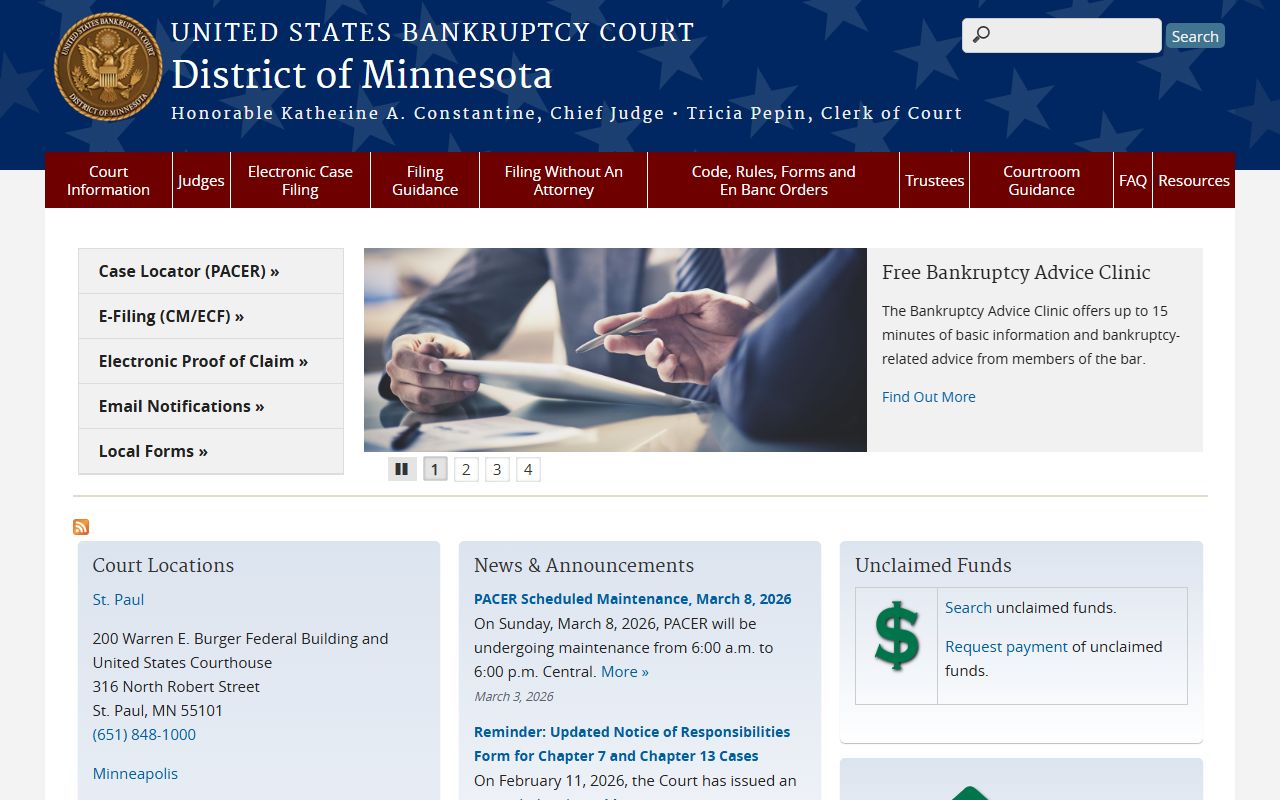
The court's website links to PACER, local forms, court locations, and the debtor help resources page, all of which are essential for finding and accessing bankruptcy records in Minnesota.
Federal Bankruptcy Court Locations in Minnesota
The court runs four offices in Minnesota. The main location is in St. Paul at the Warren E. Burger Federal Building, 316 North Robert Street, Suite 200, St. Paul, MN 55101, phone (651) 848-1000. The Minneapolis office is at the Diana E. Murphy U.S. Courthouse, 300 South Fourth Street, Minneapolis, MN 55415, phone (612) 664-5200. Both offices are fully staffed and handle records requests, filings, and in-person assistance.
A third location is in Duluth at the Gerald W. Heaney Federal Building, 515 West First Street, Duluth, MN 55802, phone (218) 529-3600. The Duluth office is unstaffed except during scheduled hearings. If you need to file documents or request records in person for northeastern Minnesota cases, go to the Minneapolis or St. Paul office. The Fergus Falls office at Edward J. Devitt U.S. Courthouse, 118 South Mill Street, Fergus Falls, MN 56537, serves western Minnesota counties and is also unstaffed outside of hearing days.
All four offices operate under one federal court district. Records from any Minnesota county are accessible through a single PACER account regardless of which office handled the filing. Office hours for staffed locations are 8:00 a.m. to 4:30 p.m., Monday through Friday. The filing deadline is 3:30 p.m. each business day.
The court locations page lists all four Minnesota offices with full addresses and the counties each location serves.
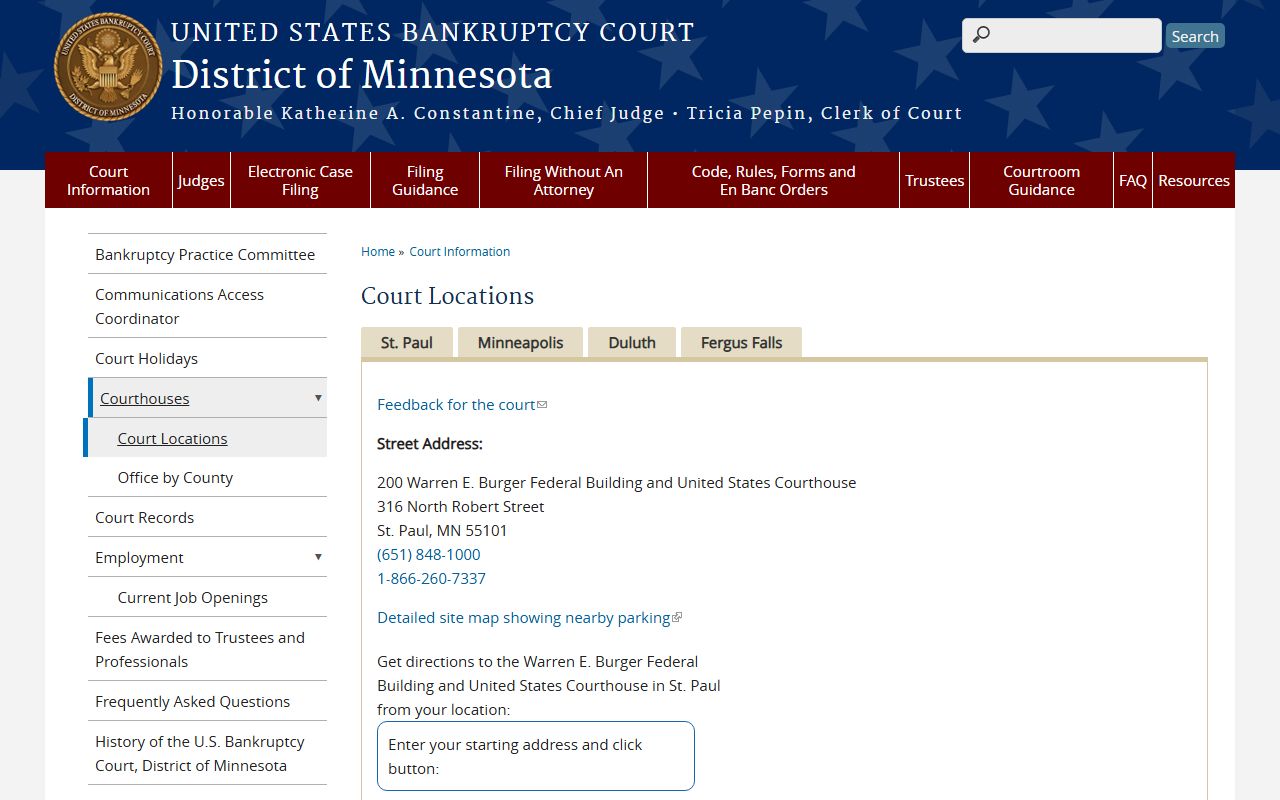
Knowing which office covers your area helps when you need to visit in person or send a records request by mail.
How to Search Minnesota Bankruptcy Records
Three main methods exist for accessing bankruptcy records in Minnesota. PACER is the primary online system. The Voice Case Information System (VCIS) gives you free phone access. Public terminals at the St. Paul and Minneapolis clerk offices let you search for free in person. The access to court records page explains all three options with full instructions.
Electronic records go back to 1999. Cases filed before that year exist only on paper. Those older files must be requested directly through the clerk's office and may take time to retrieve from storage. Under National Archives and Records Administration policy, paper records are destroyed 15 years after the case closes. If you need a pre-1999 case, act sooner rather than later.
The access to court records page at the Minnesota bankruptcy court explains each search method and the types of records available for different filing periods.
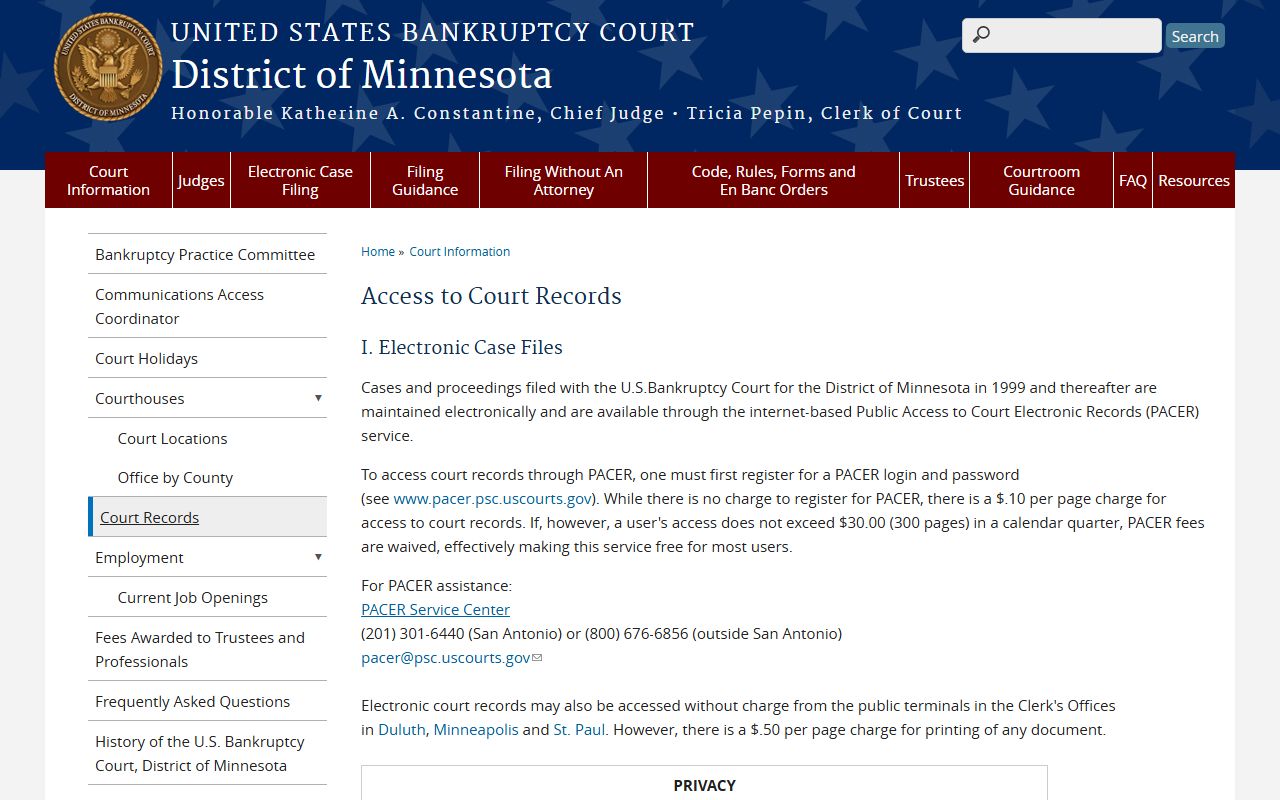
Cases filed before December 1, 2003 have some additional privacy restrictions under older court rules. Contact the clerk's office if you run into access issues on older records.
PACER: Online Access to Federal Records
PACER stands for Public Access to Court Electronic Records. It is the national system used by all federal courts. You register for a free account at pacer.psc.uscourts.gov. Once registered, you can search bankruptcy cases in Minnesota and every other federal court in the country. Searches cost $0.10 per page. If your total charges stay under $30 in a calendar quarter, the fee is waived. Many casual researchers pay nothing.
With PACER you can search by debtor name, case number, Social Security number, or Tax Identification Number. The system shows docket entries, allows you to download case documents as PDFs, and lets you check discharge status, view creditor lists, and track case activity. PACER is available 24 hours a day, every day.
Public terminals at the clerk's offices in St. Paul and Minneapolis offer free in-person PACER access. You don't need a registered account or a credit card to use them. The Duluth office has a terminal as well. These are good options if you want to search without setting up an account or if you need help from court staff nearby.
The national forms page lists all official federal bankruptcy forms used in courts across the country, including those filed in Minnesota.
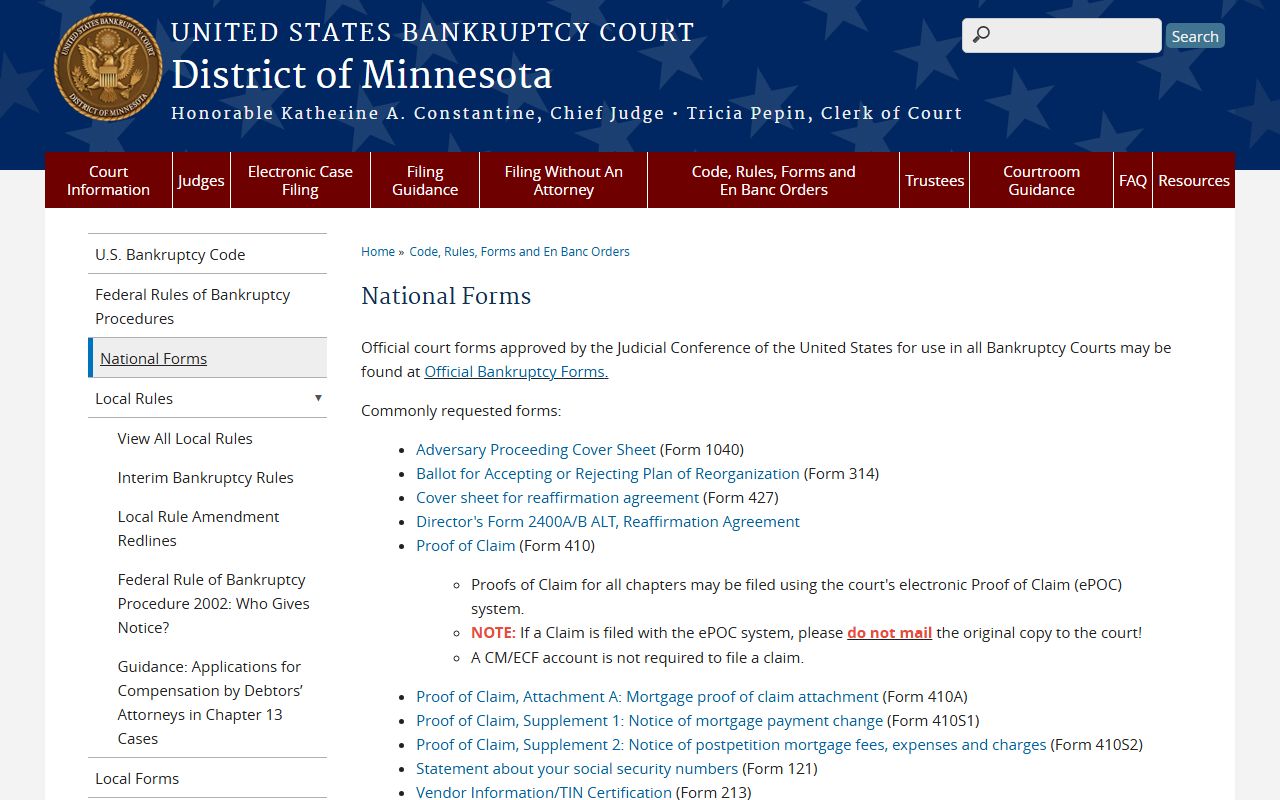
Both national forms and local Minnesota forms may be needed for a complete bankruptcy filing. Always download forms directly from the court to ensure you have the current version.
Free Phone Access with VCIS
The Voice Case Information System is a free automated phone line for Minnesota bankruptcy records. Call 1-866-222-8029 any time, 24 hours a day. The system lets you search by name, case number, Social Security number, or Tax ID. It reads back case status, key dates, and basic filing details. It does not provide document copies. Use it for a quick check on whether a case is open, discharged, or dismissed. A Spanish language option is available when you call.
What Minnesota Bankruptcy Case Files Contain
A bankruptcy case file in Minnesota holds many types of documents. The voluntary petition starts the case. Financial schedules list all assets, debts, income, and living expenses. The statement of financial affairs covers recent transactions and business history. A creditor matrix names all parties who must receive court notices. In Chapter 13 cases, the repayment plan is a central document. The discharge order closes the case and releases qualifying debts.
Most case documents are public record and accessible through PACER. Social Security numbers and certain personal financial details are redacted before documents become public. The local rules document covers all procedures for how cases are managed, how motions are filed, and what privacy protections apply at the Minnesota court.
Common documents found in a Minnesota bankruptcy file include:
- Voluntary petition for bankruptcy relief
- Schedules A through J covering assets and liabilities
- Statement of financial affairs
- Creditor matrix and proof of claim forms
- Meeting of creditors notice (341 meeting)
- Discharge of debtor order
The full set of local rules for the District of Minnesota governs all aspects of how bankruptcy cases are handled, from initial filing through discharge and case closing.
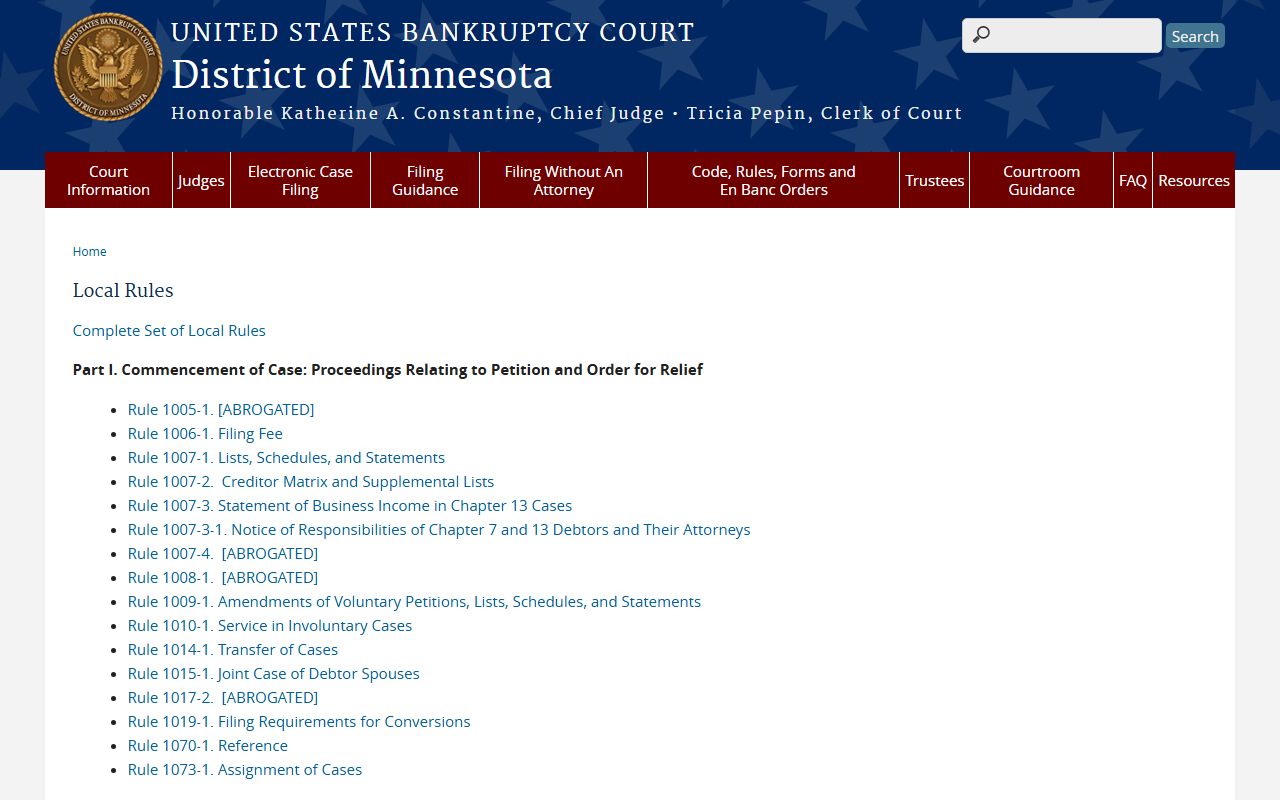
Reviewing the local rules is especially important for attorneys and pro se filers who need to understand court-specific procedures that go beyond national standards.
Requesting Copies of Minnesota Bankruptcy Records
To get printed copies of bankruptcy records, contact the clerk's office in St. Paul or Minneapolis. The fee is $0.50 per page for photocopies. Electronic documents downloaded through PACER cost $0.10 per page. For cases filed before 1999, the court may need to retrieve physical files from off-site storage. Call ahead to ask about availability and retrieval times. The request copies page explains the process and any additional procedures for archived records.
Certified copies carry the court seal and are needed for legal proceedings or official name changes. They cost more than plain copies. Contact the clerk's office for current certified copy fees before submitting your request.
Note: Paper records from closed cases are destroyed 15 years after the closing date under National Archives policy, so request older records as soon as possible.
The request for copies page on the court's website details how to order documents by mail, in person, or through the PACER system.
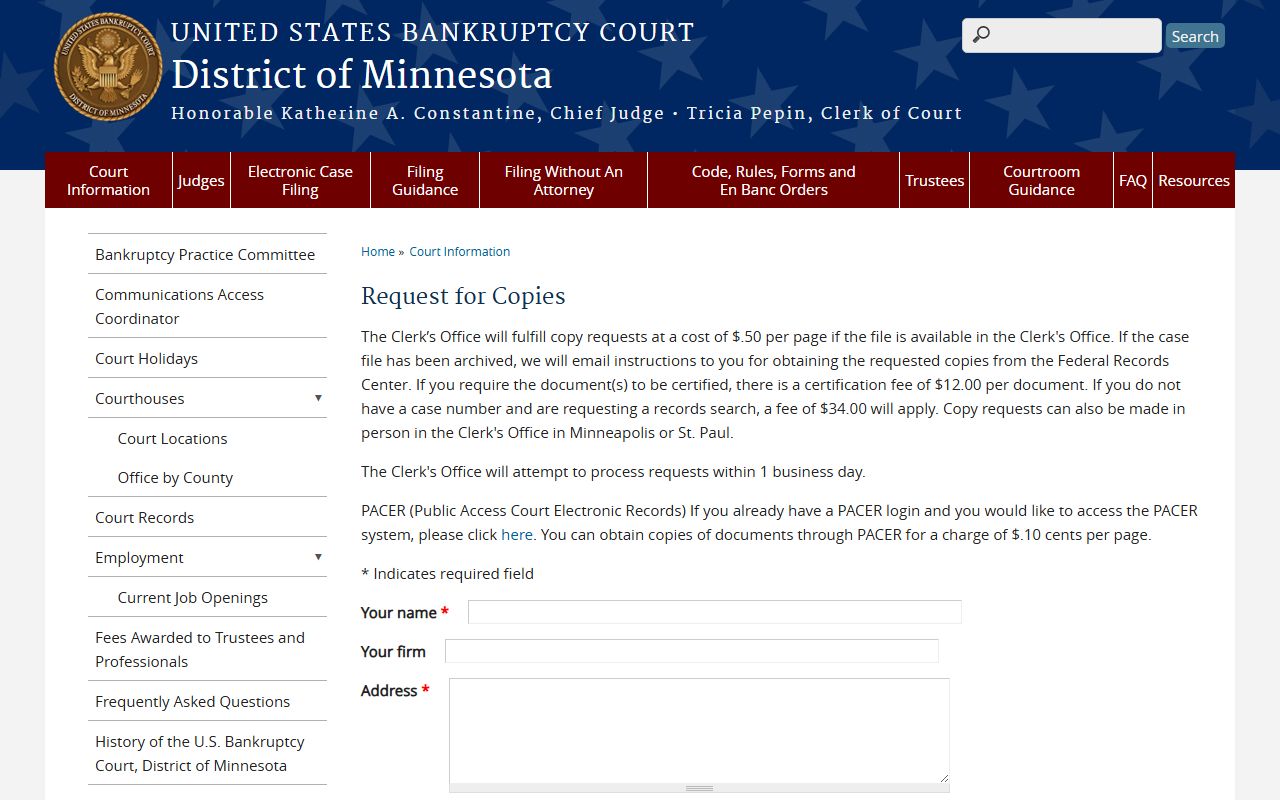
Mail requests should include the case name, case number, and a clear description of the documents needed, along with payment for the applicable fees.
Bankruptcy Forms Used in Minnesota
The Minnesota bankruptcy court uses two sets of forms. Local forms handle court-specific requirements such as attorney compensation disclosures, Chapter 13 plan documents, and local motion forms. All local forms are available in PDF and Microsoft Word format at the local forms page. One important note: PDF forms must be "flattened" before electronic filing due to Adobe Acrobat security issues. Failing to flatten the PDF before filing can cause the submission to be rejected.
The local forms page lists every court-specific form required for Minnesota bankruptcy filings, in both PDF and Word formats.
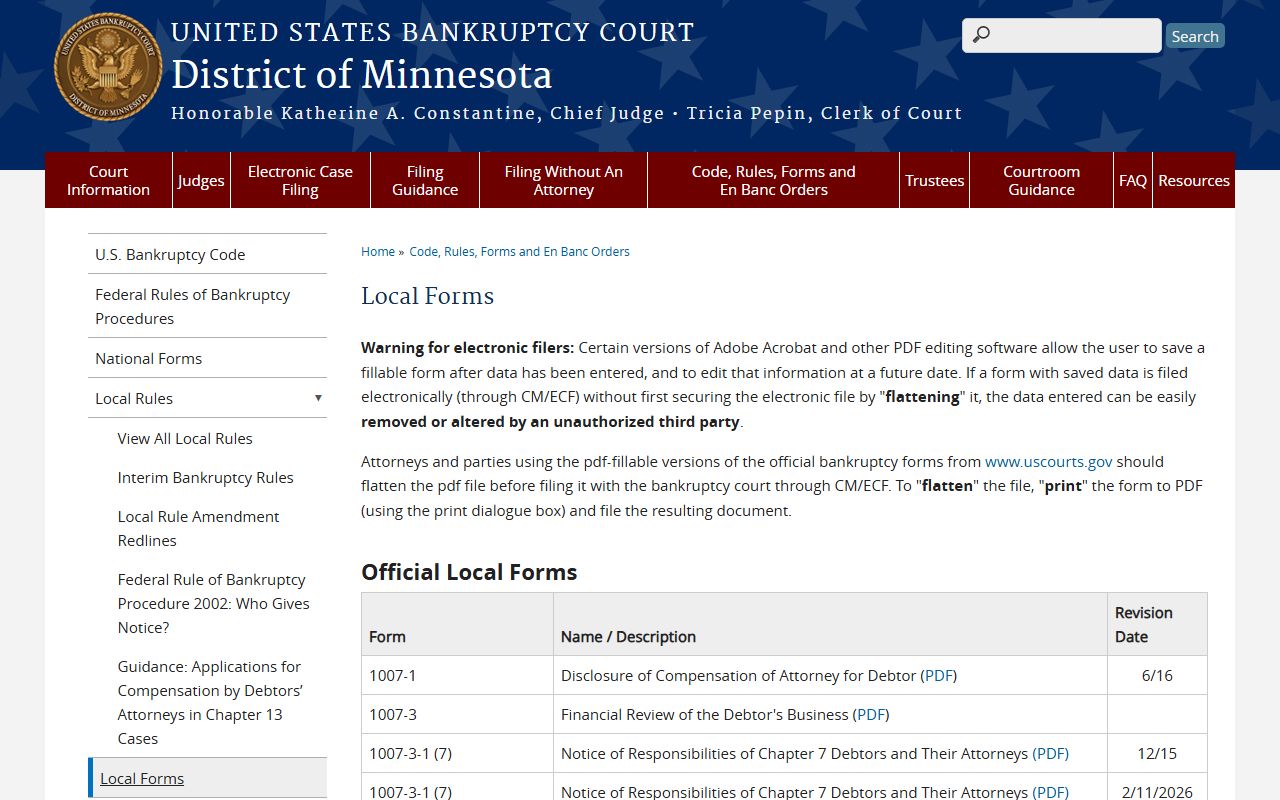
PDF flattening removes interactive form fields before filing. Most PDF editors and free online tools can flatten a form in seconds before you submit it to the court.
State Court Role After Bankruptcy in Minnesota
Bankruptcy discharges happen at the federal level, but state courts play a role after the federal case closes. If a creditor held a state court judgment against you before the bankruptcy, that judgment may still appear in county court records even after you receive a federal discharge. Under Minnesota Statute 548.181, you can apply to the county District Court to discharge those state judgments. The filing fee is $5 per judgment. Creditors have 20 days to object to the discharge application.
This is a separate process from the federal court discharge. The federal court eliminates the underlying debt obligation. The state court process removes the judgment lien from public county records. Both steps may be needed to fully resolve certain debt issues, especially real property matters. The Minnesota Judicial Branch bankruptcy help page explains how state and federal court processes interact and where to find assistance with the judgment discharge application.
Minnesota Statute 548.181 governs the process for discharging state court judgments after a federal bankruptcy discharge has been granted.
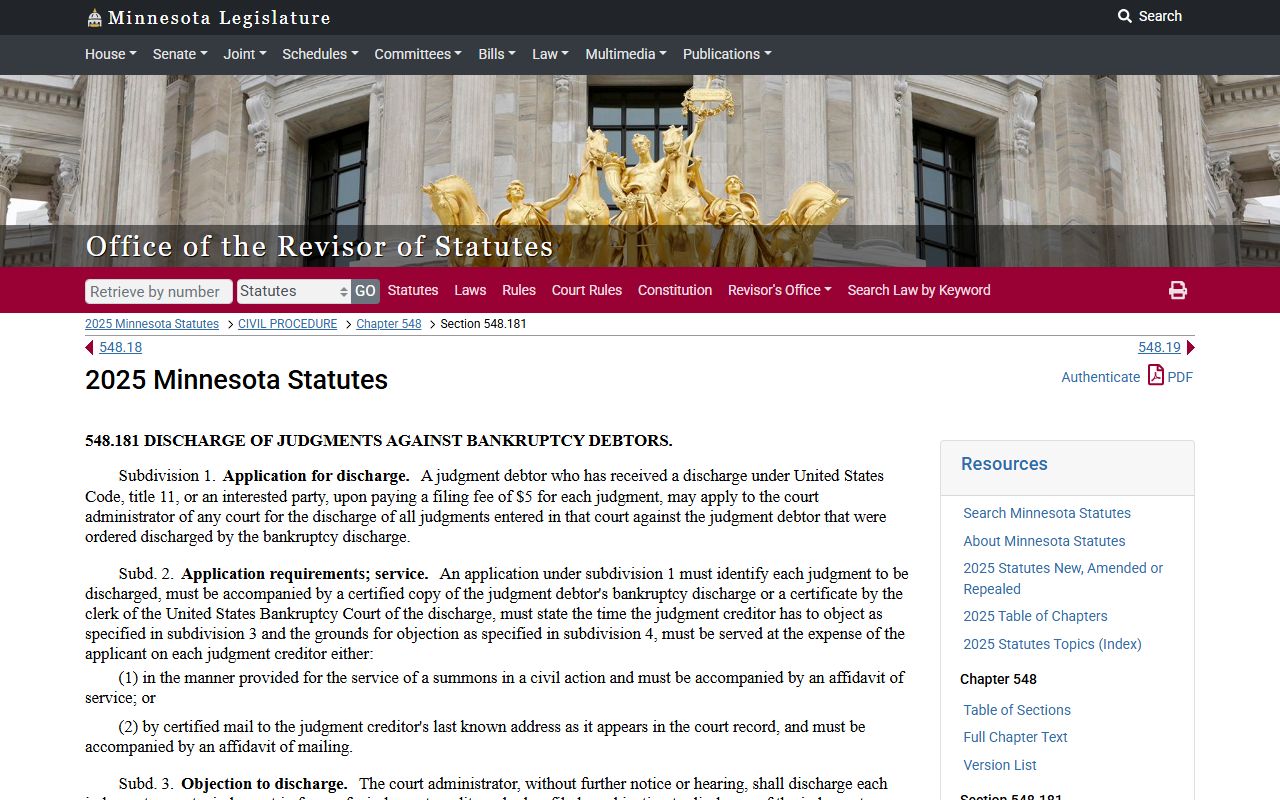
The District Court in each Minnesota county handles these judgment discharge applications after a federal bankruptcy. Each application requires a $5 filing fee and creates a new state court record.
Minnesota Court Records Online (MCRO)
Minnesota Court Records Online is a free state court records system. It covers District Courts in all 87 counties. You can search it at publicaccess.courts.state.mn.us. MCRO shows civil cases, family court matters, criminal cases, and district court judgments. It is useful for finding state court judgment records that relate to pre-bankruptcy debt.
MCRO does not contain federal bankruptcy cases. Those are in PACER. If you search MCRO and don't find a bankruptcy filing, that's because MCRO is not the right system. Use PACER for federal court records and MCRO for state court records. They are separate databases covering different courts.
The Minnesota Court Records Online system at publicaccess.courts.state.mn.us gives free public access to state court cases in all 87 counties, but does not include federal bankruptcy filings.
Use MCRO alongside PACER to get a complete picture of both federal bankruptcy activity and related state court proceedings involving the same party.
Free Legal Help for Minnesota Bankruptcy
Several organizations offer free or low-cost legal help for Minnesota residents dealing with bankruptcy. The debtor help resources page on the court's website lists attorney referral programs, pro bono legal services, and self-help tools. The page also clarifies what the clerk's office staff can and cannot help you with, which saves confusion when you visit in person.
Statewide, LawHelpMN provides free self-help guides, forms, and legal information for people navigating bankruptcy without an attorney. The Volunteer Lawyers Network at vlnmn.org runs free legal clinics across Minnesota. Central Minnesota Legal Services at cmls-mn.org focuses on the Twin Cities metro. Southern Minnesota Regional Legal Services covers southern counties. Legal Services of Northwest Minnesota at lsnm.org handles cases in the northwest. Legal Aid Service of Northeastern Minnesota at lasnem.org serves the northern half of the state. All of these groups can help with bankruptcy questions or connect you with a lawyer who can.
The Minnesota bankruptcy court also holds periodic Free Bankruptcy Advice Clinics. Check the court's main website for dates and locations. These clinics let you talk with a volunteer attorney at no charge before or during your case.
The debtor help resources page at the Minnesota bankruptcy court lists pro bono legal services, attorney referrals, and self-help resources for people navigating bankruptcy filings in Minnesota.
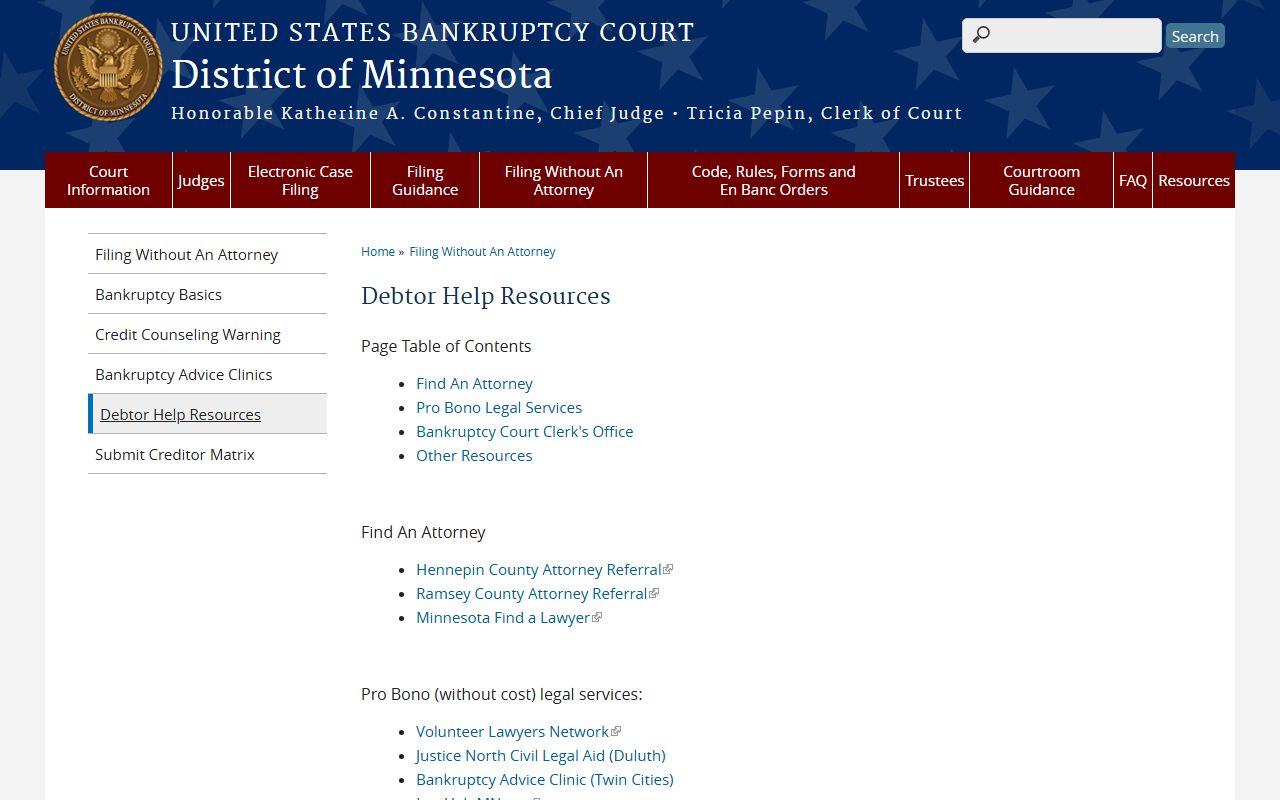
The page is updated regularly with current clinic dates, approved credit counseling providers, and links to forms and guides for people who want to handle their own case.
The Minnesota Judicial Branch bankruptcy help topic page explains the connection between federal bankruptcy proceedings and state court procedures in Minnesota.
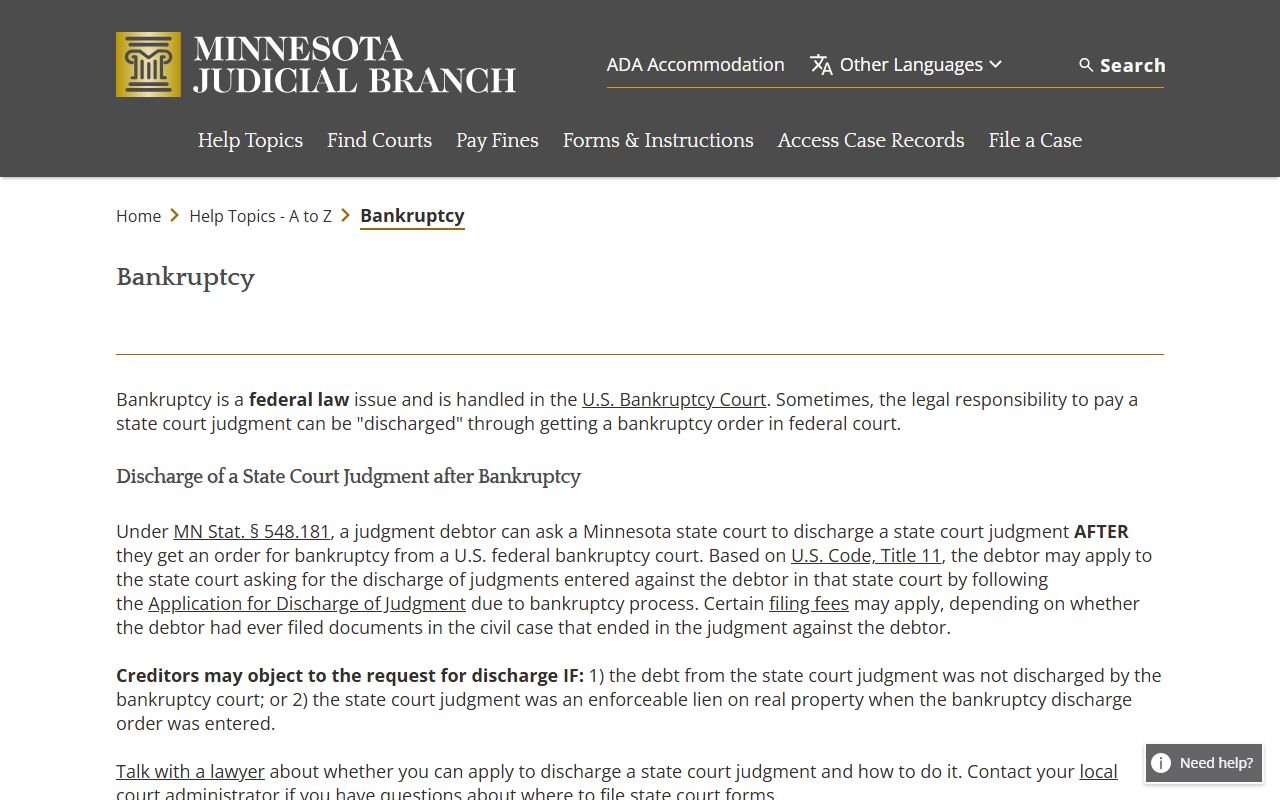
The state court's guidance on bankruptcy covers what the state system handles, where to find self-help resources, and how the federal and state processes interact for judgment discharge matters.
Additional Minnesota Bankruptcy Resources
Cross-referencing the federal PACER system with state MCRO results gives the most complete picture of a person's court and debt history in Minnesota.
Note: Court fees and procedures can change. Check the court's archived news and announcements page for any recent rule updates or fee schedule changes before you file or request records.
The archived news and announcements page on the court's website tracks all major rule changes, fee updates, and court notices going back several years.
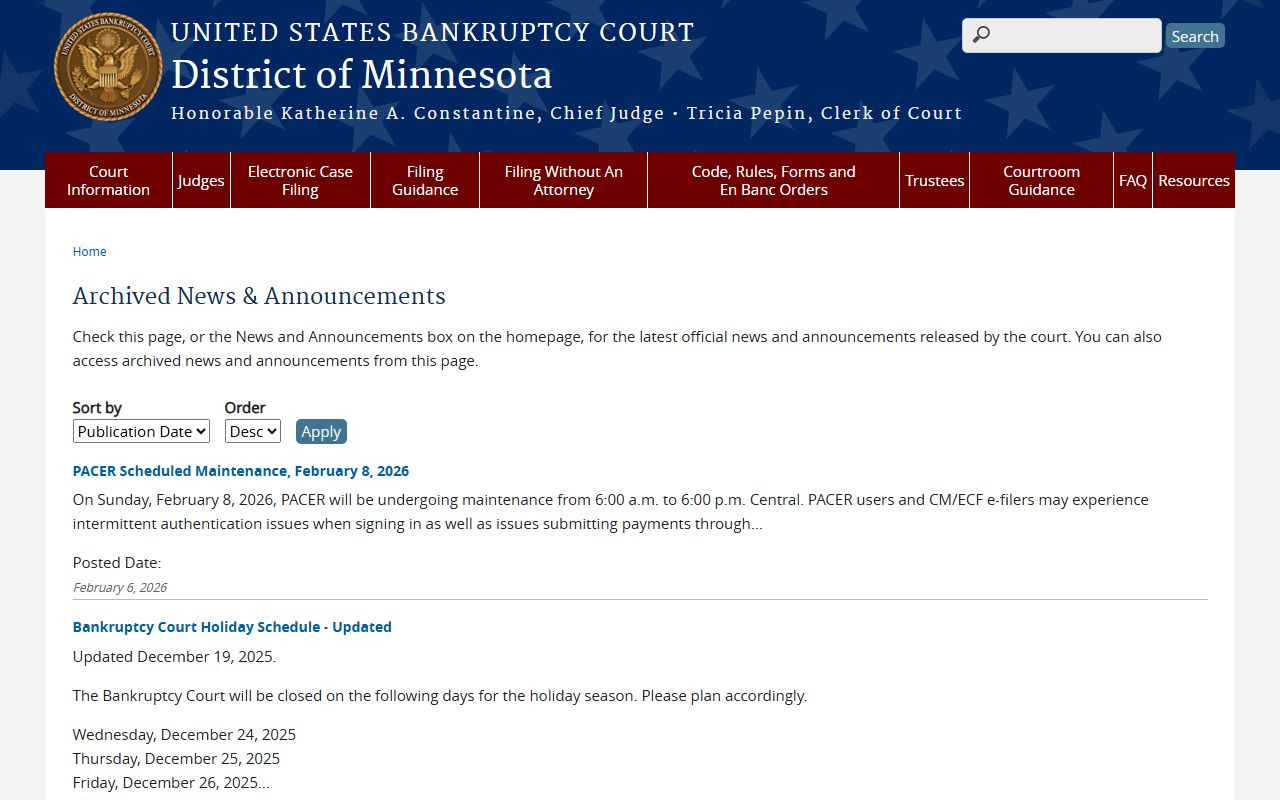
Staying current on court announcements helps you avoid surprises when filing documents or submitting records requests at any of the four Minnesota bankruptcy court locations.
Browse Minnesota Bankruptcy Records by County
Each of Minnesota's 87 counties falls under the jurisdiction of the federal bankruptcy court. County District Courts handle related state court matters like judgment discharge applications. Pick a county below to find local court contact info, legal aid resources, and guidance specific to that area.
View All 87 Minnesota Counties
Bankruptcy Records in Major Minnesota Cities
Residents of major Minnesota cities file bankruptcy cases at the federal court. The Minneapolis and St. Paul offices handle most metro-area cases. Select a city below to find federal court info, legal aid organizations, and resources for that area.